Faded, swirled or chalky paint doesn't always need a respray. This guide breaks down the difference between a cut and polish and full paint correction, what each actually does to your clear coat, and how to tell which one your car's paint genuinely needs.
What's in this guide
- Why paint fades, swirls and goes chalky in Australia
- What a cut and polish actually does to your paint
- Paint correction — the deeper, more thorough process
- Cut and polish vs paint correction: which does your car need?
- When a respray is the only honest answer
- How to get the gloss back without overpaying
Why paint fades, swirls and goes chalky in Australia
If you're reading this, chances are your car's paint has lost its shine. Maybe it's gone dull and flat, maybe there are swirl marks that show up under the streetlights, or maybe the colour's gone chalky and washed out. Out in the Wimmera, that's not unusual — the Australian sun is genuinely harsh on paint, and years of UV exposure in open country will oxidise and fade even good-quality paintwork. Add in stone chips from highway running, dust and grime bonded into the surface, and the occasional automatic car wash with dirty brushes, and it's no wonder the gloss disappears over time.
The good news is that a lot of tired paint doesn't need a respray. If the clear coat is still intact — not peeling, not flaking, just dull and swirled — the gloss can usually be brought back with the right machine work. The question is whether you need a cut and polish or a full paint correction, and that depends on how bad the paint actually is. Let's break down the difference, because they're not the same thing even though people use the terms interchangeably.
What a cut and polish actually does to your paint
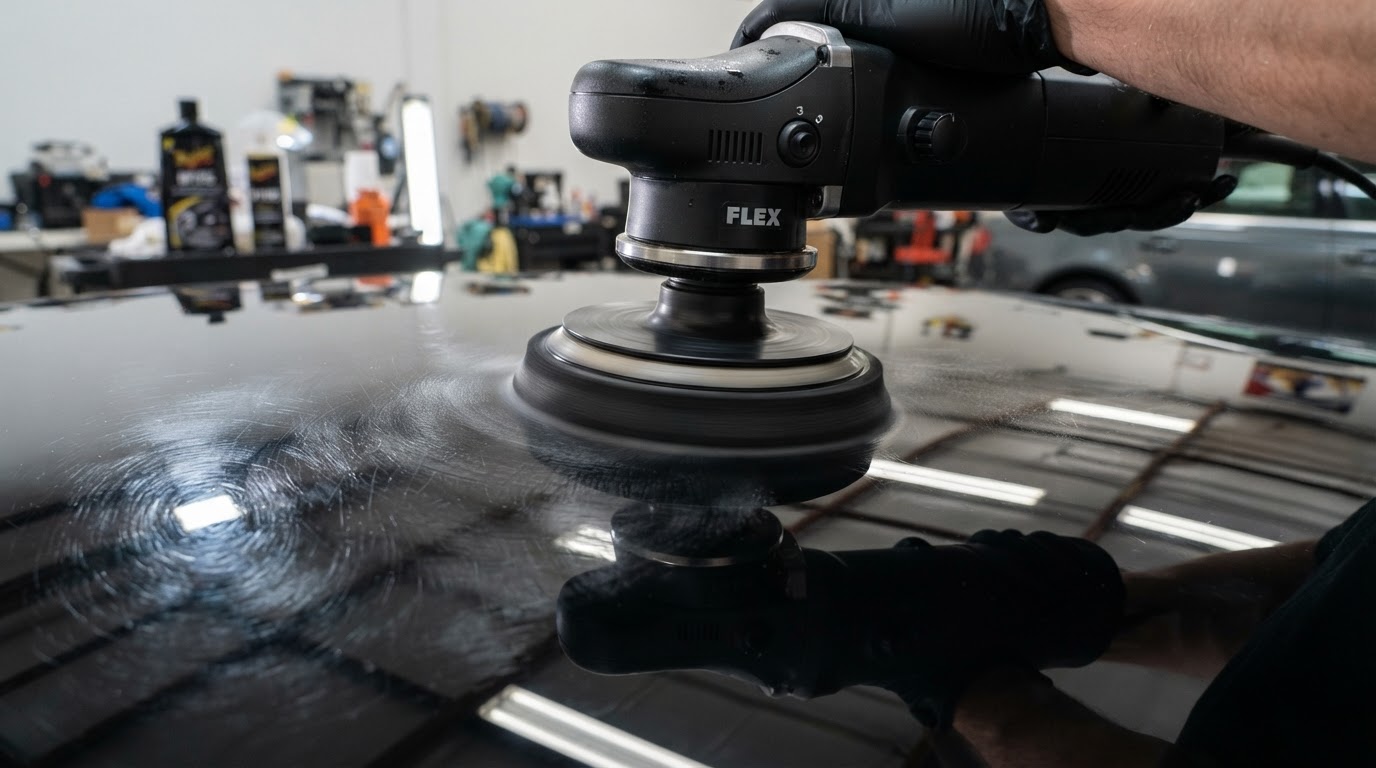
A cut and polish is a machine process that removes a microscopic layer of the clear coat to take out the defects sitting on top of and just inside the surface — light oxidation, swirl marks, fine scratches, and the bonded contaminants that dull the reflection. The "cut" is the aggressive stage: a cutting compound worked with a machine and a pad that levels the top of the clear coat. The "polish" is the refining stage: a finer compound that brings up the gloss and clarity so the paint reflects light properly again.
Done properly, a cut and polish transforms dull, swirled paint into paint that looks deep and wet again. It's one of the most satisfying jobs in autobody work because the difference is immediate and visible — you can see the gloss come back panel by panel. For a lot of Wimmera vehicles that have just faded from sun and washing, it's exactly what's needed. If you want to see what's involved, our cut and polish service page walks through the process in detail, from the decontamination wash that has to happen first through to the machine stages and the protective sealant that locks the finish in.
The key word there is "properly." A cut and polish is only as good as the person running the machine. Too aggressive and you burn through the clear coat — which can't be fixed without a respray. Too light and the defects stay. Uneven pressure and you get hologramming, those cloudy streaks that show up under certain lights. It's a job that takes a feel for the machine, the pad, the compound and the paint, and an honest assessment of how much clear coat is actually there to work with.
Paint correction — the deeper, more thorough process
Paint correction is the more comprehensive version of the same idea. Where a cut and polish is often a one- or two-stage process aimed at bringing back general gloss, paint correction is a multi-stage process aimed at removing as many defects as possible — deeper scratches, heavy oxidation, water spots, acid-rain etching, and the full range of swirls and holograms. It typically involves a heavier cut to level the deeper defects, followed by one or more refining stages to bring the clarity back up, with the paint measured and inspected under proper lighting between stages.
The difference is depth and thoroughness. A cut and polish will dramatically improve the look of moderately faded paint. Paint correction goes further — it's the process you'd choose for a vehicle where the owner wants the paint as close to flawless as the clear coat will allow, or where the defects are deep enough that a single cut won't touch them. Naturally, paint correction takes more time, more stages and more skill, and that's reflected in the cost. It's not better or worse than a cut and polish — it's a different job for a different level of defect and a different expectation of finish.
Why clear coat thickness matters
Both processes remove clear coat — that's the whole mechanism — so how much clear coat you have to work with is the hard limit on what's possible. Factory clear coats are surprisingly thin, sometimes only a couple of mils, and every cut removes a fraction of that. If a car's been polished repeatedly, or if the clear coat is already thin from age and UV, there may not be enough material left to cut out the deeper defects safely. An honest operator measures the clear coat before committing to a process, because burning through it is permanent — the only fix is a respray of that panel.
Cut and polish vs paint correction: which does your car need?
The honest answer is: it depends on what's actually wrong with the paint, and you can't know that properly until it's been decontaminated and looked at under good light. But as a rough guide:
- If the paint is dull, lightly oxidised, or has swirl marks from washing — a cut and polish is usually the right call. It's faster, more affordable, and brings back the gloss that's been lost to UV and surface defects.
- If the paint has deeper scratches you can catch with a fingernail, heavy oxidation, water-spot etching, or visible holograms from a previous bad polish — paint correction is what's needed to actually remove those defects rather than just gloss over them.
- If the clear coat is peeling, flaking, or has been burned through anywhere — no amount of polishing will fix it. That panel needs refinishing or a respray.
- If the paint is sound but the vehicle just wants a refresh and protection — a decontamination and a lighter polish, finished with a sealant, might be all it needs.
The trap to avoid is being sold the wrong service. A cut and polish won't remove deep scratches no matter how many times it's run over them — and a full paint correction is overkill (and overcost) for paint that just needs a refresh. The right process is the one matched to what's actually on the car, and that's why an honest assessment comes before the quote, not after.
When a respray is the only honest answer
Sometimes the paint is past saving by machine, and the honest thing is to say so. If the clear coat has failed — peeling, flaking, or burned through — polishing it will only make it worse. If the colour's been UV-damaged right through the base coat and gone permanently chalky in patches, a cut and polish will bring up the sound areas but the damaged patches will still stand out. In those cases, a respray of the affected panels — or a full respray if the whole car's gone — is the only thing that'll genuinely fix it.
The flip side is equally important: plenty of cars get sent for a respray when a cut and polish would have brought them back. If the clear coat is intact and the paint's just dull and swirled, a fraction of the cost of a respray gets you a finish that looks new again. That's why the assessment matters — it's the difference between spending a little to restore what's there and spending a lot to repaint what didn't need repainting.
"The right process is the one matched to what's actually on the car. Anything else is either undersold or oversold."
How to get the gloss back without overpaying
If your car's paint has gone dull, swirled or chalky, the first step is getting it properly assessed — not quoted blind. Send through photos that show the paint in good light, note how old the paint is and whether it's been polished before, and from there you'll get an honest read on whether it's a cut and polish, a paint correction, or a respray that the paint genuinely needs.
For Horsham drivers and anyone across the Wimmera — from Warracknabeal to Ararat — the sun and the country roads do a number on paint, and a lot of vehicles that look tired are actually sound underneath. A proper cut and polish, finished with a protective sealant, brings the gloss back and adds a layer of defence against the UV that caused the fade in the first place. And if the paint's past saving, you'll be told straight — no one should be polishing clear coat that's already failing.
It's also worth noting that a cut and polish pairs well with other work. If you're already having a bumper repaired or a panel refinished, having the rest of the car cut and polished at the same time brings the whole vehicle back to a consistent finish — and it's more efficient than doing them separately. The same goes for detailing, which handles the decontamination and interior side of a proper turn-out.