A scuffed or cracked bumper doesn't always mean a replacement. This guide explains how to tell whether your bumper can be repaired, when a panel genuinely needs replacing, and how to avoid paying for a new part you didn't need.
What's in this guide
- Why bumper damage is so common on Wimmera roads
- When a bumper can be repaired instead of replaced
- When a panel genuinely needs replacing
- The hidden damage behind a scuffed bumper cover
- Repair vs replace: the honest cost comparison
- How to get your damage assessed properly
Why bumper damage is so common on Wimmera roads
Bumpers cop the lot. Car-park scuffs in the Horsham Plaza, reversing mishaps into posts and bollards, stone strikes on the Western Highway, the odd wildlife encounter on a country road — if there's one part of a car that takes more damage than any other, it's the bumpers. And the moment it happens, the question that matters is whether it can be repaired or whether it needs replacing, because the difference in cost is significant and the right answer isn't always obvious.
A bumper repair in Horsham is one of the most common jobs that comes through the door, and the honest reality is that most scuffed, scraped and even cracked bumpers can be repaired rather than replaced. But not all of them — and knowing the difference is what separates a fair quote from one that sells you a new part you didn't need, or one that patches up a bumper that should have been replaced. Let's break down how to tell.
When a bumper can be repaired instead of replaced
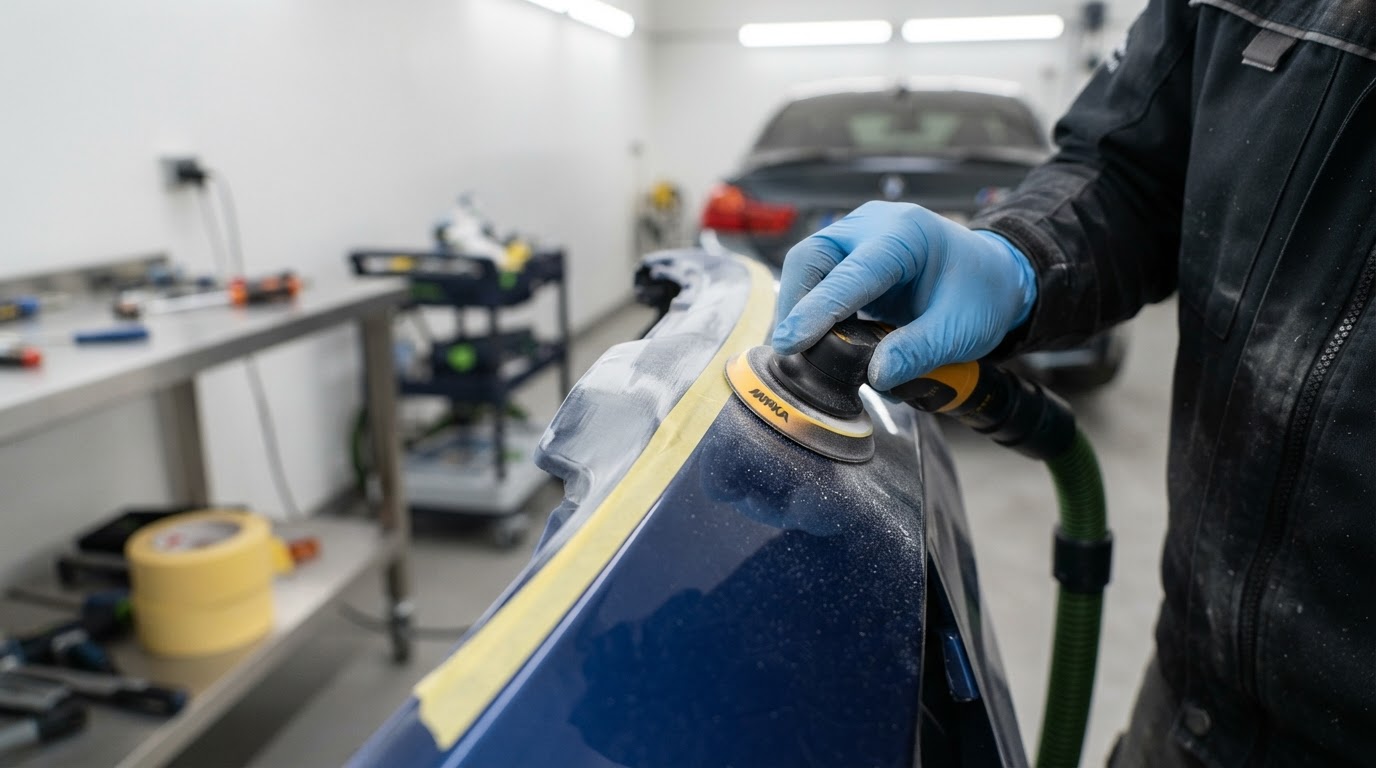
Modern bumper covers are mostly plastic or composite, which is good news for repair — plastic can be welded, filled, reshaped and refinished in ways metal can't. A scuff that's taken off the paint but not damaged the structure, a scrape that's gouged the plastic, a crack that's clean and repairable, or a small dent that can be pushed and heat-shaped back — all of these are repairable. The process involves repairing the plastic (welding cracks, filling gouges, reshaping), refinishing the surface, colour-matching to the rest of the car, and laying down a fresh clear coat so the repair disappears.
The upside of repairing rather than replacing is significant. You keep the original panel — which means the factory fit, the mounting points and the panel gaps all stay exactly as they were. A replacement bumper, even a good one, has to be aligned and fitted, and a poorly-fitted aftermarket bumper can leave you with uneven gaps and alignment issues that weren't there before. Repairing also keeps the cost down, because you're not paying for a new part. If you want to see what's involved in getting a damaged bumper assessed and repaired, our bumper repairs service page breaks down the process — from the initial assessment of whether repair or replacement is the right call, through the repair and colour-match, to the final inspection.
Types of bumper damage that are usually repairable
- Scuffs and scrapes where the paint's come off but the plastic underneath is intact — these refinish cleanly with a colour match and blend.
- Gouges in the plastic that haven't compromised the structural shape — these can be filled and reshaped before refinishing.
- Clean cracks in the bumper cover — these can be plastic-welded from behind and refinished on the face so the repair is invisible.
- Small dents and distortions in plastic bumpers — heat and careful reshaping can often bring these back without any fill.
- Paint transfer from another car or object — often this polishes or compounds off entirely, sometimes with a light refinishing of the affected area.
When a panel genuinely needs replacing
There's a point where repair stops being the right call, and an honest panel beater will tell you when you've reached it. A bumper cover that's shattered into multiple pieces, a crack that's run right across a structural fold, a panel that's been crushed past its mounting points, or a bumper where the mounting tabs have broken off — these are cases where a repair would be patching up something that won't hold up or won't fit right, and a replacement is the genuine better call.
The same logic applies beyond bumpers. A door, guard or quarter panel that's been creased across a structural line, torn, or rusted through is often beyond economical repair — and trying to force it back can leave you with a panel that looks passable but is weaker than it should be. In those cases, sourcing and fitting a quality replacement panel — then colour-matching it in so it sits flush with even gaps all round — is the honest answer. The key word is "honest": the call between repair and replace should be made on what's genuinely best for the vehicle, not on what's most profitable for the workshop.
The hidden damage behind a scuffed bumper cover
Here's the part that catches people out: a bumper cover can look only lightly scuffed on the outside while hiding real damage behind it. The bumper cover is the visible plastic; behind it sits the reinforcement bar (the impact bar), the mounting brackets, and sometimes sensors and trim. A hit that barely marked the cover can have cracked the reinforcement bar, bent a mounting bracket, or knocked an alignment out — and none of that shows until the cover comes off.
This is why a proper assessment matters more than a photo-quote. A photo of a scuffed bumper tells you what the outside looks like, but not what's behind it. An honest assessment — either in person or after a careful look — flags the possibility of hidden damage and accounts for it in the quote, with a clear explanation that some costs can only be confirmed once the bumper's off and the structure is visible. That's not vagueness; it's honesty about the limits of what you can see. A quote that ignores the possibility of hidden damage entirely is the one to be wary of.
"A scuffed bumper cover can hide a cracked reinforcement bar behind it. The honest quote accounts for what you can't see yet — the cheap one pretends it isn't there."
Repair vs replace: the honest cost comparison
In straightforward terms, repairing a bumper is almost always cheaper than replacing it — you're not buying a new part, and you're keeping the factory fit. A repair involves the labour of fixing the plastic and refinishing it, plus the materials. A replacement adds the cost of the part itself (which varies enormously depending on the vehicle and whether it's a genuine, quality aftermarket, or second-hand panel), plus the labour of fitting and aligning it, plus the same refinishing and colour-match work.
So the cost decision isn't really "repair or replace" — it's "is this bumper repairable, and if so, is repairing it the right call?" The answer is yes to both in the majority of cases. Where replacement becomes the better call, it's because the damage is beyond repair, the structure is compromised, or — rarely — the cost of repairing approaches the cost of a replacement, at which point the new panel is the better long-term investment. An itemised quote makes all of this transparent: you see the cost of the part (if one's needed), the labour, and the finish work separately, so you can make the call with the facts in front of you.
One note on cost: this business isn't registered for GST, so there's no GST added to any quote — the price you're quoted is the price you pay. Every quote is itemised and fixed, broken down into parts, labour and finish work line by line, so there are no surprises at handback.
How to get your damage assessed properly
The right first step with any bumper or panel damage is to get it assessed honestly — and that starts with sending through a couple of photos. Snap the damage from a couple of angles, note how it happened (a reverse into a post hits differently to a stone strike on the highway), and from there you'll get a straight answer on whether it's a repair or a replacement, what's involved, and what it'll cost.
For drivers across the Wimmera — whether you're in Horsham itself or coming in from Dimboola, Natimuk or further out — sending photos first is the efficient way to do it. You'll find out straight whether it's something we can take on, and you deal directly with the person doing the work from the first quote through to the final inspection. Every vehicle gets a full inspection before it's handed back — if the repair, the colour match or the fit isn't right, it doesn't leave.
And if the damage turns out to be more than just the bumper — if there's adjacent panel damage, or the paint around it needs attention — the assessment will flag that too. A scuffed bumper often comes with a broader autobody repair or a refinishing of the surrounding panels, and the honest quote covers all of it in one itemised breakdown. That way you see the whole job, not just the obvious bit.